+Insight
Instagram Influencer Marketing: Reels, Stories and Creator Partnership Strategy
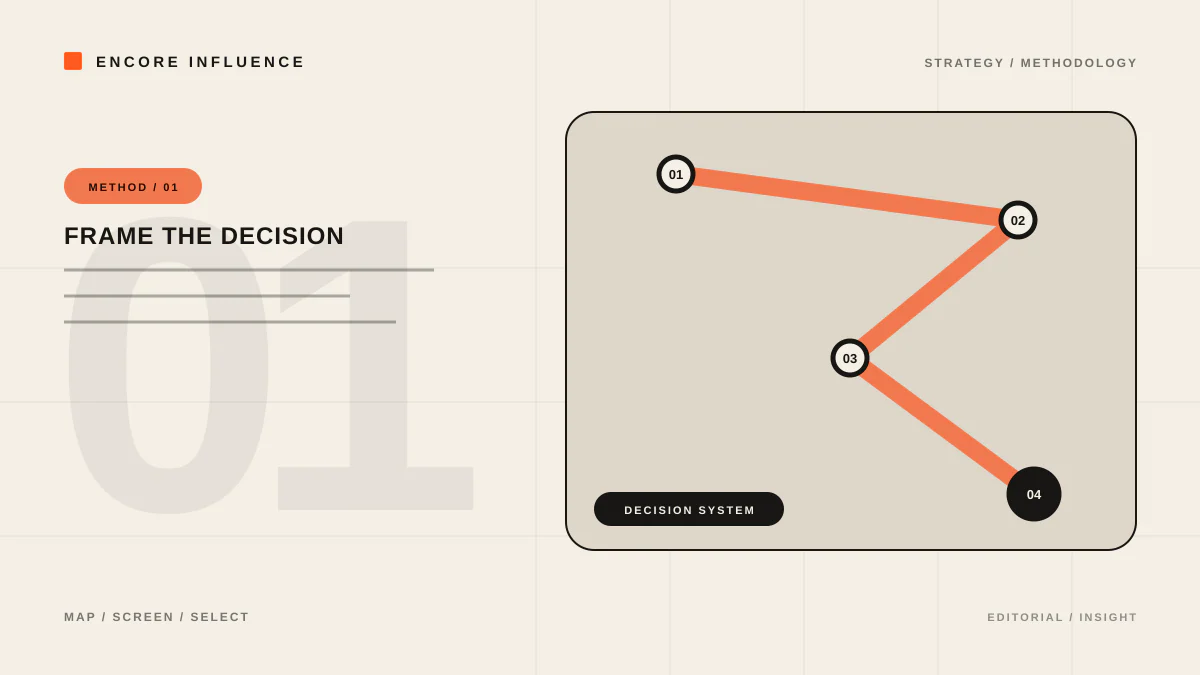
+Key takeaways
The short answer.
A practical guide for international beauty, fashion and design-led brands choosing creator roles on Instagram: when to use Reels, Stories and longer-term partnerships, how to build a creator portfolio, and how to operationalize collaboration using Meta’s current partnership tooling.
- Key point / 01Use Reels for scalable, native discovery and creative testing when you need content that can travel beyond an individual creator’s immediate audience.
- Key point / 02Use Stories when you want time-sensitive, conversational, or lower-friction creator touchpoints that support launches, drops, reminders, and behind-the-scenes narratives.
- Key point / 03Treat longer-term partnerships as a portfolio layer, not just a contract length: they are most useful when brand fit, product cadence, and creator credibility justify repeated collaboration.
- Key point / 04Build your Instagram creator mix around roles, not just names: discovery creators, conversion-minded creators, community creators, and always-on partners each solve different campaign jobs.
- Key point / 05Meta’s current Instagram tooling supports direct creator outreach, multi-creator project sending, and partnership ad workflows, so your operating model should separate creator selection from distribution planning.
- Key point / 06For overseas beauty and fashion brands, the deciding factor is usually market fit and content behavior, not a one-size-fits-all platform rule or a universal best format.
Direct Answer
For an Instagram campaign targeting overseas beauty, fashion or design-led consumers, the best answer is usually not “Reels or Stories?” but “What job should each format do?”
Use Reels when you need native discovery, broad creative testing, and reusable assets that can support scaling. Use Stories when you need speed, urgency, sequencing, or a more conversational creator-to-audience touchpoint. Use longer-term creator partnerships when the brand and creator have enough fit to justify repeated collaboration, stronger familiarity, and a more stable content relationship.
That is the most useful decision frame because Meta’s current Instagram collaboration tooling is designed around flexible creator discovery and partnership distribution, not a single fixed campaign model. Instagram expanded Creator Marketplace to additional markets, brands can contact creators directly or send projects to multiple creators, and advertisers can boost organic Instagram content as partnership ads or create new partnership ads in Ads Manager Source 2. Meta also says branded-content and partnership-ad workflows are part of creator monetization on Instagram and Facebook, and creators can allow brand partners to boost branded content Source 1.
So the practical choice is not format alone. It is the combination of:
- Campaign objective
- Creator role
- Market fit
- Content behavior
- Distribution plan
If you are building an overseas campaign, especially in beauty or fashion, the winning portfolio often mixes all three: Reels for reach and creative learning, Stories for high-context activation, and longer-term partnerships for consistency and credibility.
How to Choose Between Reels, Stories and Longer-Term Partnerships
1) Choose Reels when the campaign needs scalable discovery
Reels are usually the strongest fit when your main job is to introduce a product, show a transformation, prove a look, or turn a creator’s content into reusable creative. Reels are also useful when the brand wants a more durable asset that can be repurposed across paid and organic activity.
For overseas beauty and fashion brands, Reels are especially valuable when:
- the product requires visual explanation
- the brand wants to test multiple hooks quickly
- the campaign needs content that feels native to Instagram’s short-form behavior
- the team wants to identify which creators and angles deserve deeper investment
This is not the same as saying Reels always win. It means Reels are often the best starting point for structured testing and broad exposure.
2) Choose Stories when the campaign needs immediacy and conversation
Stories work well when the message is time-sensitive or when you want a lower-friction format that feels closer to a direct recommendation. They are useful for:
- launch reminders
- limited-time offers
- event or drop countdowns
- product education in a sequence
- behind-the-scenes or day-in-the-life storytelling
Stories are also helpful when you want a creator to appear more personal and present, rather than polished and permanent. For beauty and fashion brands, that can matter when trust comes from authenticity, not production value.
3) Choose longer-term partnerships when the creator can become a repeat brand asset
Longer-term partnerships are not just about duration. They are about whether the creator can serve as a stable role in your campaign system. A good long-term partner usually has:
- repeatable audience relevance
- a style that stays recognizable over time
- enough flexibility to support multiple briefs
- credible product-category alignment
- commercial discipline that works across markets and launches
A longer-term creator relationship is most efficient when the brand has recurring launches, seasonal updates, or a need to build trust gradually in a new market. It is less useful when the product is one-off, the market is experimental, or the creator’s style changes too often for consistency.
A Practical Portfolio Model for International Brands
A strong Instagram creator program should not rely on a single format or a single tier of influencer. Instead, build a portfolio with distinct roles.
Role 1: Discovery creators
These creators help you test product angles, hooks, and native storytelling styles. They are usually best used in Reels because the format is suited to audience discovery and rapid learning.
Use this role when you need to answer:
- Which message works best?
- Which visual hook is strongest?
- Which creator style feels most natural in the target market?
Role 2: Conversion-support creators
These creators are selected for product clarity, trust, and action-driving content. They may appear in Reels, Stories, or both, depending on the buying journey and the local platform behavior.
Use this role when you need to answer:
- Which creator can explain the product simply?
- Which format helps reduce friction?
- Which content can support retargeting or paid amplification?
Role 3: Community creators
These creators help the brand look present in the market. They are especially useful for Stories and recurring touchpoints, where audience familiarity matters more than a one-time impression.
Use this role when you need to answer:
- How do we stay visible between launches?
- How do we make the brand feel local?
- How do we create ongoing presence without overproducing?
Role 4: Long-term partner creators
These are the creators you invest in repeatedly because the fit is strong enough to justify a stable relationship. They can support multiple formats, but the point is consistency: brand memory, creative reliability, and easier campaign planning over time.
Use this role when you need to answer:
- Which creators should become recurring faces of the brand?
- Which creators can carry seasonal or multi-drop collaboration?
- Which partnerships are worth the operational overhead of deeper coordination?
A Decision Framework You Can Use Before Briefing Creators
Before you choose formats, answer these five questions.
1) What is the campaign job?
If the job is awareness, Reels usually deserve priority. If the job is urgency or reminder behavior, Stories deserve more weight. If the job is repeated trust-building, longer-term partnerships become more relevant.
2) What kind of product are you marketing?
Beauty and fashion products are often visual, sensory, and trend-sensitive, which makes short-form video attractive. But a highly technical product, a high-consideration item, or a product needing detailed explanation may need more than a quick Reel.
3) How much creative reuse do you need?
If the brand plans to reuse content across paid, organic, or multiple market launches, Reels often provide more flexible raw material. If the content is time-sensitive and should disappear after a period, Stories can be the right tool.
4) How stable is your market plan?
If you are entering a new country or region, you may need a broader test-and-learn mix first. If the market is mature and the product cadence is predictable, longer-term partnerships can become more efficient.
5) What creator behavior fits the market?
Different markets have different creator habits, content norms, and audience expectations. That means format choice should follow local behavior, not just headquarters preference.
How Meta’s Current Tooling Affects Your Operating Model
Meta’s current Instagram announcements matter because they change how teams can organize collaboration.
Brands can use Creator Marketplace in additional markets, reach out to creators directly, or send projects to multiple creators Source 2. That means your team can structure campaign sourcing at scale instead of handling every creator relationship one by one. Meta also confirms that advertisers can boost organic Instagram content as partnership ads or create new partnership ads in Ads Manager Source 2. In addition, branded-content and partnership-ad workflows are part of creator monetization on Instagram and Facebook, and creators can allow brand partners to boost branded content Source 1.
For decision-makers, the operational implication is simple:
- Selection and collaboration can happen directly through creator discovery and outreach
- Distribution can be planned separately through partnership-ad workflows
- Format role should be decided before briefing, not after posting
That separation matters. If you treat every creator post as the same deliverable, the campaign becomes harder to optimize. If you assign a clear role to each format, you can build a more controlled portfolio.
What Approved Case Evidence Suggests About Creator Portfolio Design
Approved Encore case evidence supports the portfolio logic, even though it does not prove a single universal Instagram formula.
In one approved TEMU program, Encore Influence supported the brand’s United States content acquisition work by identifying proven TikTok Shop assets, negotiating creator rights, and preparing selected content for an always-on Instagram Reels pipeline. The approved case record reports 1,000+ sourced assets, a 260+ peak monthly volume, and 500M+ total Reels views across 6+ months. The key lesson is not “Reels always work.” The lesson is that when brands need a steady stream of native creative, they often need a screening system, rights management, and a repeatable content pipeline rather than a single campaign burst.
In another approved TEMU program across the United States, Germany, France and Canada, local creators produced content for TikTok, Instagram, YouTube, Snapchat and Facebook, and the approved case record reports 100M+ total views, 40+ monthly content pieces, 100+ cumulative creators and 200K+ engagements. The useful takeaway is that creator portfolios often need to be built by market, category and platform together, not by assuming one universal creator archetype.
In the approved SHEIN case, Encore Influence worked across more than 30 markets to find fresh fashion creators, check prior brand collaboration, and maintain a consistent pipeline of native fashion content. The approved case record reports 100+ creators, 10M+ total views and 100+ published content pieces. That supports an important point for international fashion brands: when markets mature, the challenge becomes not just finding creators, but finding the right mix of freshness, fit and collaboration history.
In the approved SHEGLAM case, beauty creators were matched by product suitability, audience credibility and cost efficiency across 10 markets, with an actual CPM of 15 or lower, 25% below the target CPM, and the top-performing video reaching 310K+ views and 20K+ engagement. Those results are case-specific and should not be generalized, but they reinforce the broader point that format choice should be tied to product fit and performance discipline.
A Simple Checklist for Brand Teams
Use this checklist before you brief creators:
- Define the campaign job: discovery, education, urgency, trust, or repeat engagement
- Decide whether Reels, Stories, or a longer-term partnership best fits that job
- Separate creators into roles instead of treating them as one flat list
- Check market fit and audience relevance before thinking about volume
- Confirm whether the creator can support repeat collaboration if you want a long-term partnership
- Decide how content will be distributed: organic only, partnership ad, or both
- Plan for reuse if the content has enough quality and commercial value
- Build market-specific rules instead of applying one global brief unchanged
What to Avoid
Do not choose Reels simply because they feel “more important.” Do not choose Stories just because they are easier to produce. Do not lock every creator into a long-term partnership if your market is still being tested. And do not expect one format to solve every campaign need.
The most common mistake is confusing format with strategy. Format is the delivery vehicle. Strategy is the portfolio of roles, markets, and objectives behind it.
Methodology and Limitations
This article uses two verified sources of evidence:
- Meta / Instagram first-party announcements confirming current collaboration and partnership-ad tooling, including Creator Marketplace expansion, direct creator outreach, project sending to multiple creators, and partnership ad workflows Source 2.
- Approved Encore case evidence showing how international creator portfolios are structured across markets, categories, and formats in real programs. These cases support operational patterns, not universal platform laws.
Limitations:
- The evidence does not prove that Reels are always superior to Stories.
- It does not establish a universal best ratio between one-off posts and long-term partnerships.
- It does not prove that a specific metric outcome from one approved case will repeat in another market.
- It does not include an approved Instagram-only case, so some examples are cross-platform operating patterns rather than pure Instagram-only proofs.
The safest decision rule is to match the format to the campaign job, then validate by market and creator behavior.
Frequently Asked Questions
Should I brief creators for Reels and Stories in the same campaign?
Often yes. A mixed-format campaign can be more effective than a single-format brief because it lets you assign different roles: Reels for reach and testing, Stories for urgency and conversation, and long-term partnerships for continuity.
How many creators should be long-term partners?
There is no universal number. The right number depends on how many markets you are in, how frequently you launch, and how much operational capacity you have to manage repeat collaboration. Start with a small group of strong-fit partners and expand only when the workflow is stable.
Is a longer-term partnership always more efficient?
Not automatically. It can be more efficient when the creator fit is strong and the brand needs repeat exposure or consistent storytelling. If fit is weak, a long-term arrangement can lock in poor performance and reduce flexibility.
Can Stories do the same job as Reels?
Sometimes partially, but not usually in the same way. Stories are better for immediacy, sequence, and direct communication. Reels are better for discovery, creative reuse, and broader distribution potential.
What should overseas beauty and fashion brands prioritize first?
Prioritize local relevance, then format fit, then collaboration structure. For overseas brands, the best creator is usually the one whose audience, style, and platform behavior match the local market—not just the biggest name.
Does Meta provide tools for these workflows?
Yes. Meta says Instagram expanded Creator Marketplace to additional markets, brands can contact creators directly or send projects to multiple creators, and advertisers can boost organic Instagram content as partnership ads or create new partnership ads in Ads Manager Source 2. Meta also says branded-content and partnership-ad workflows are part of creator monetization, and creators can allow brand partners to boost branded content Source 1.
How should I explain the strategy internally?
Use a simple sentence: “We are not buying posts; we are designing a creator portfolio with distinct roles.” That framing helps leadership understand why one campaign may need Reels for reach, Stories for activation, and longer-term partnerships for continuity.
Related Services and Cases
- Instagram Marketing Service — for campaign planning, creator selection, and Instagram execution support.
- Global Influencer Marketing Service — for cross-market creator systems and overseas expansion.
- SHEGLAM multi-market beauty case — useful for understanding market-by-market creator selection in beauty.
- SHEIN global fashion creators case — useful for understanding how mature fashion programs keep finding fresh creator voices.
- TEMU US content acquisition case — useful for understanding always-on content sourcing and Reels pipeline design.
Conclusion
If you need a direct answer: use Reels for discovery and scalable creative, Stories for immediacy and conversation, and longer-term partnerships for repeatable brand fit.
The strongest Instagram influencer marketing strategy is not format-first. It is role-first. Build a portfolio of creators around the job each format should do, then use Meta’s collaboration and partnership-ad tools to support the operating model. That is the most practical way for international beauty, fashion and design-led brands to grow across markets without overcommitting to the wrong content structure.
Verified Sources
+FAQ
Overseas creator discovery, answered clearly.
01Should a brand start with Reels or Stories on Instagram?+
Start with the format that matches the campaign job. Reels are usually the stronger default when you need scalable discovery, reusable creative, and a more “public” content asset. Stories are better when the job is urgency, immediacy, or direct creator-to-audience conversation. Most overseas brand campaigns should not choose one format forever; they should assign each format a role in the portfolio.
02Are longer-term creator partnerships always better than one-off posts?+
No. Longer-term partnerships are best when the brand has repeat product drops, ongoing market education needs, or a creator whose audience and aesthetic already fit the brand well. If fit is weak or the product changes too quickly, short-term testing may be safer before committing to a longer relationship.
03What does Meta currently support for Instagram creator collaboration?+
Meta says Instagram expanded Creator Marketplace to additional markets, that brands can reach out to creators directly or send projects to multiple creators, and that advertisers can boost organic Instagram content as partnership ads or create new partnership ads in Ads Manager.
04How should beauty and fashion brands think about creator selection across markets?+
Use market fit first, then format fit, then commercial fit. In practice, that means checking local audience relevance, content style, product-category credibility, and whether the creator’s work behaves naturally in Reels, Stories, or an ongoing partnership structure.
05Can one creator play all three roles: Reels, Stories and partnership ambassador?+
Sometimes, yes. But the better operating model is to decide by role rather than assumption. A creator may be excellent for Reels testing, useful for Stories-based launches, and suitable for a longer partnership only if their audience and content consistency support that level of commitment.
+Methodology
This article is based on verified first-party Meta / Instagram announcements and approved Encore Influence case evidence. The platform facts used here are limited to what Meta has publicly confirmed: Instagram expanded Creator Marketplace to additional markets, brands can contact creators directly or send projects to multiple creators, and advertisers can boost organic Instagram content as partnership ads or create new partnership ads in Ads Manager. Creator monetization workflows also include branded-content and partnership-ad permissions. For campaign design guidance, the article draws on approved Encore case evidence showing how creator portfolios are built across markets, categories, and formats in real programs. Where the article makes strategic recommendations, those are operational analysis rather than platform guarantees.
+Limitations
This guide does not claim that Reels always outperform Stories, or that longer-term partnerships are universally better than one-off collaborations. The provided evidence confirms collaboration tooling and creator permissions, but it does not establish a universal format hierarchy. Approved case evidence is not Instagram-only in every instance, so it should be treated as operating-pattern context rather than proof of a single Instagram-native result. Any performance figures mentioned in case evidence are specific to those approved programs and should not be generalized to all markets, categories, or budgets. No ROI, sales, conversion, or virality guarantees are made.
+Source basis
- Meta / Instagram, Making it Easier for Brands and Creators to Collaborate on Instagram, announced 2024-02-21: https://about.fb.com/news/2024/02/creator-marketplace-for-brands-and-creators-to-collaborate-on-instagram
- Meta / Instagram, Giving Creators More Ways to Earn Money on Facebook and Instagram, announced 2023-11-07: https://about.fb.com/news/2023/11/giving-creators-more-ways-to-earn-money-on-facebook-and-instagram